I Charged $8,000 Using Budget Gear
Feb 17, 2026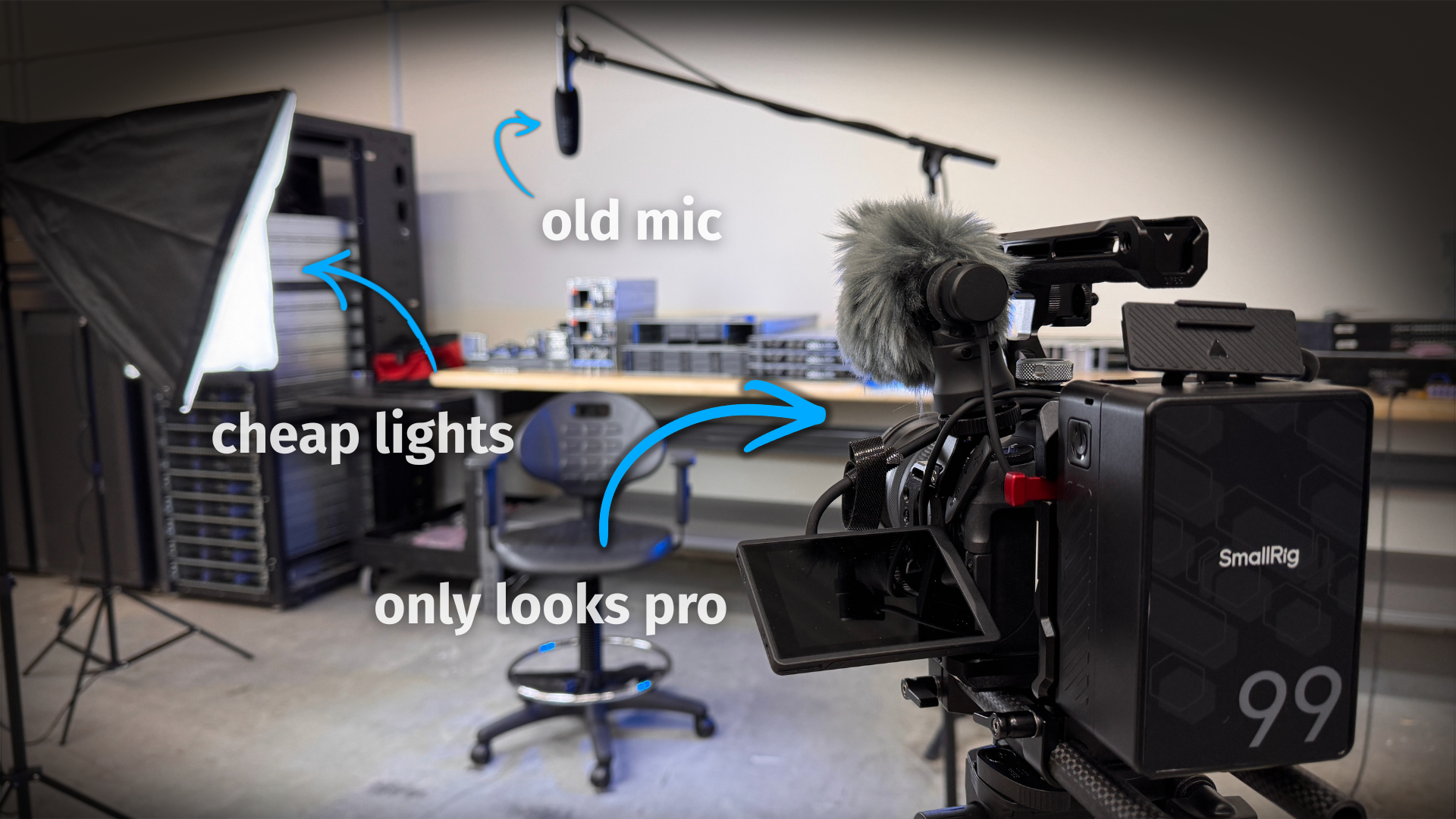
In an effort to break the myth that you need to have top-of-the-line cinema gear to charge good money for your production, I spent 6 hours with a client filming 3 videos using equipment that I could have purchased twice for what they paid me, and I’m going to tell you exactly how I did it.
But before I can get into the good stuff, I need to tell you what this post is not about… This is not an attempt to brag about anything I’ve done. I fully understand that “good money” is relative. Some will look at this and say, “that’s it?” while others will read in disbelief. The only reason I even dropped the dollar amount is because I want you to know that if you’re not charging north of $5,000 for a full, multi-video production, you may either be undervaluing yourself, or you’re working with the wrong clientele and it may be time to pivot.
This post is also not about taking advantage of clients. I firmly believe the value my client received from this production will exceed $8k. I am also extremely strategic with my pricing, and I determine the levels based on the scope of the project discovered during my initial engagement. Doing your research ahead of time is key here as pricing is not a ‘one size fits all’ approach.
Alrighty, let’s unpack the project, the equipment I chose, and what led to an $8,000 deal.
The Project
Sometime last summer (we’ll say August), I got a call from a good friend up in Michigan. He’d been working for a tech company based in Massachusetts that wanted to start publishing videos on social media, but didn’t have a marketing team to make it happen. That call led to another call with his Managing Partner who explained to me what they were looking for. As it turns out, I have an extensive background in their industry, and I know how to make videos (remember that). It was then decided to hold a formal video call to outline the vision and purpose, and to see if my skillset aligned with their goals. It was a perfect fit.
After a few more calls, we landed on a single ad to be filmed on location… 1,400+ miles away. Agreed upon price for the project = $4,000. In hindsight, this was horribly underpriced for the amount of travel, but admittedly I didn’t have the confidence to ask for more, and that’s when the real creativity kicked in. I knew I was already going to be in New Jersey for a few days in January, and if I played my cards right, all I’d have to do is rent a car and drive a few hours for the shoot. Much to my pleasant surprise, it worked! With this plan, I no longer needed to factor in the cost of flights for my trip, and I got to see parts of New England I’d never been to before.
At this point I’ve landed a video and agreed on a price. But I still had a hard time with that much travel for only $4k. Then I remembered my client mentioning a couple of other “wish list” videos they thought might be nice in the future. With one email, I suggested we spend the day together and tackle 3 videos at once since I’ll already be in the area. I’ll charge $4k for the first video, and bundle the other 2 for the same amount (an additional $4k). It was a no brainer and a big win.
The Equipment
So now that the project had been agreed to, I needed to figure out not only what to bring, but how I was going to pack it all. For every shoot, you obviously want to have a plan, but it’s wise to prepare for the unexpected. The challenge with travel though, is that overpacking can mean the difference between a carry-on and another checked bag. I decided to pack light and bring the necessities. If the shoot called for anything else, I’d have to get creative.
Here is a complete list of the gear I brought with me:
- Camera:
- Canon EOS R8
- Lenses:
- Canon 28-70mm F2.8 IS STM
- Canon 24-50 F4.5-6.3 IS STM (backup)
- Batteries:
- Canon LP-E17 x2
- SmallRig VB99 SE
- Pack AA x 10
- Memory:
- SanDisk 256 GB Extreme Pro (main)
- SanDisk 128 GB Extreme Pro (backup)
- Audio:
- Canon DM-E100 (camera-mounted shotgun)
- Rode NTG-2 Shotgun
- Neewer CM28 Pro Lavalier System (2 mics)
- Zoom H4essential Handy Recorder
- Lighting:
- Amazon Softboxes x2
- SmallRig Vibe P96L RGB Light x2
- Extras:
- 20ft XLR (mic) Cable
- Amazon Tripod (for camera)
- Amazon Tripod (for cell phone/Zoom recorder)
- Headphones
- USB-C Cables and Chargers
A couple of things to note here. There is not a ton of redundancy, which is a big “no no” for someone who has worked in the tech industry most of their career. On the one hand, I was limited to the gear I had, but I was also travelling for non-video reasons which meant I needed to pack extremely light. With this setup, I knew I’d be able to film a talking-head style video in just about any environment, and battery power should not be an issue, even if we filmed all day. Where I had the most redundancy is audio, but that is mainly because I knew I’d be filming near a server room with a lot of noisy fans running. Running 3 different mic sources not only gave me backups in the event of failure, but it also gave me options for choosing the most clarity.
Bringing it All to Life
It’s one thing to script out a video and pack all the gear. It’s another thing entirely to actively shoot said video and play the simultaneous roles of director, audio engineer, scriptwriter, and editor. Earlier I said to remember that I’ve got an extensive background in my client’s industry. I’m not just another videographer to them, I speak their language and the language of their customers. This alone is worth a premium, and one I’m sure they’re happy to pay. Of the 3 videos we filmed that day, only the original ad was planned and scripted. The rest was like building an airplane on the runway.
Not every video opportunity is going to be the best fit, but if you can find the ones that directly align to your experience, your clients will pay top dollar. I don’t just mean video experience either. I’m talking about all of the life you’ve lived up to this point. Did you play a lot of sports growing up? Are you passionate about computer programming? Did you get a degree in Nursing or Culinary before pivoting later in life? Any one of these backgrounds brings a unique set of skills, ideas and experiences to the table. When seeking new clients, you are not just selling a video. You are selling the story that you are uniquely positioned to write. You don’t have to be the world’s greatest videographer, just find the clients who believe you are best suited to help them, and then do just that.
I’ll be the first to admit I’m not the best videographer or editor. Truth is, I’m a creative who got a ‘real job’ to pay the bills and one day picked up a camera almost by accident. Take some time to unpack your story and focus on serving those you mesh with. If you put that into action, it won’t be long before you’re creating amazing content, and getting paid well too.
Discover The 6 Steps to Creating Pro Video Without Pro Gear
Enter your name and email below to receive your free 18-page PDF guide,
"6 Steps to Creating Better Video"
We hate SPAM. We will never sell your information, for any reason.